About us
A solar company that expects to still be here in twenty-five years.
Surya Home Solar Energy designs and installs rooftop solar for homes, shops and small businesses across Gwalior and the surrounding districts of Madhya Pradesh.
Book a free site survey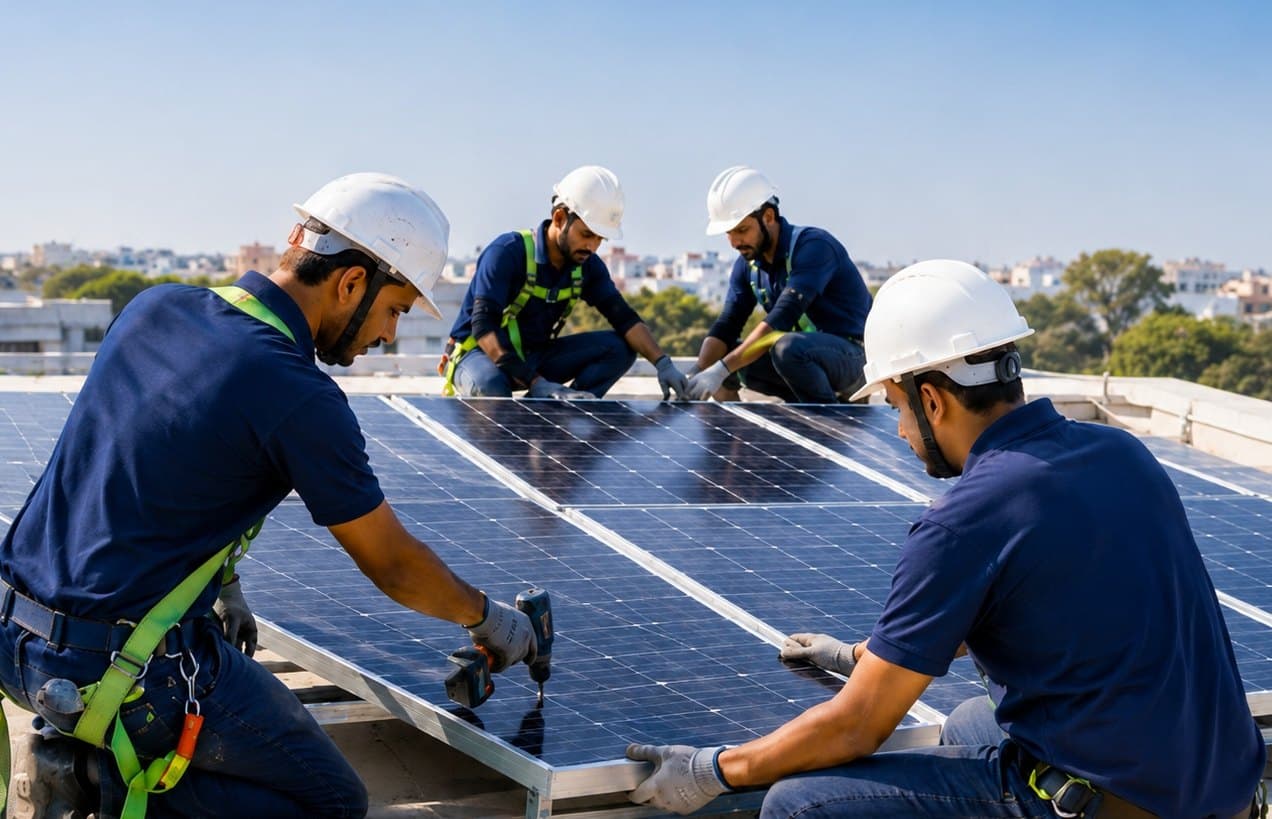
Who we are
Powering homes. Empowering futures.
Solar in India is sold hard and installed carelessly. Most of the failed systems we are called out to look at did not fail because the panels were bad — they failed at the structure, the foundation or the cabling, within a few years of a very cheap quotation.
We built this business around the opposite approach. Hot-dip galvanised structures with proper chemical anchoring. N-Type TOPCon bifacial modules with a thirty-year performance warranty. Cabling routed and clipped the way it should be. It is not the cheapest way to put solar on a roof, and it is the only way that still makes sense on the day the warranty would have run out.
Everything is handled in-house — the site survey and shadow analysis, the 3D design, the net-metering paperwork with the discom, the installation itself, and the service visits afterwards.
- 80–90%
- Cut in your monthly bill
- 30 yrs
- Performance warranty
- 1 day
- Typical install time
- 5 yrs
- Free maintenance
Typical on-grid rooftop system
15-year product warranty
Standard residential rooftop
Cleaning and inspection included
How we work
Four things we hold to.
These are the rules we actually run the business by, and you are welcome to hold us to them.
We size the system to your bills
Not to a round number that sounds good on a quotation. If your consumption says 3 kW, we will not sell you 5 — and we will show you the arithmetic we used.
We do our own installations
No labour contractors who disappear after handover. The crew on your roof is on our payroll and answers to us if something is wrong two years later.
We tell you what solar will not do
An on-grid system will not run through a power cut. Your bill will not go to zero. You will hear both from us at survey stage, not discover them afterwards.
We come back
The first five years of cleaning and inspection are included, because a system nobody maintains quietly stops delivering what it was sold on.
The panel we fit
N-Type TOPCon, bifacial, dual glass.
The generation figure on a quotation is only worth what the module behind it can hold twenty years from now. We fit dual-glass bifacial modules because they degrade slower, hold output in heat, and keep working when the light is poor.
- Module efficiency
- 22.80%+
- Performance warranty
- 30 years
- Product warranty
- 15 years
- Positive power tolerance
- +4.99 W
Dual side power generation
Bifacial dual-glass modules capture sunlight on the front and reflected light on the back, adding output the same footprint would otherwise waste.
Higher energy yield
N-Type TOPCon cells keep producing usefully in low light and under cloud, so you gain generation at the start and end of every day.
Lower temperature coefficient
Output falls off less as the panel heats up — which matters a great deal through a Gwalior May, when a lesser panel is losing power exactly when you need it.
Built for a long life
Dual glass construction resists moisture ingress and micro-cracking, holding performance far longer than a standard backsheet module.
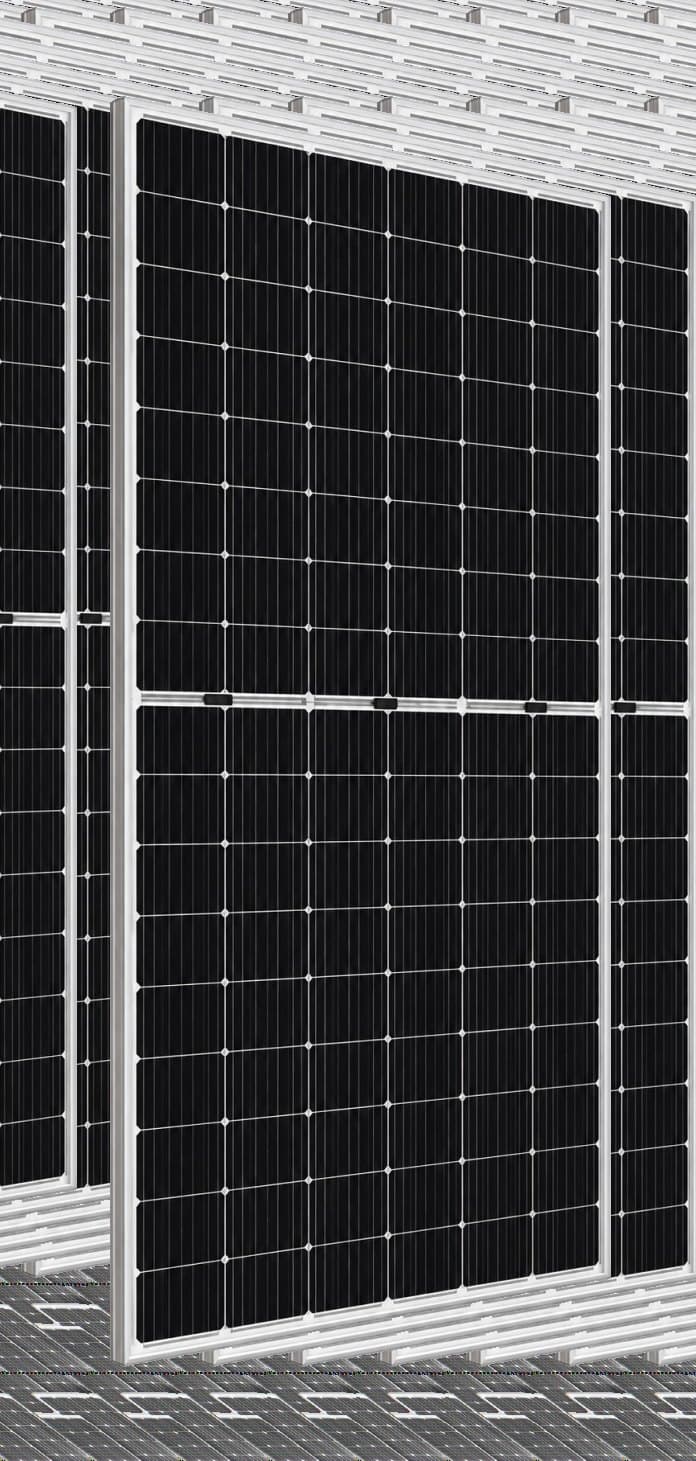
Every panel is tested
- 100+ point quality checklist
- Mechanical load testing
- Power & efficiency testing
- X-ray (EL test) on every panel
- Raw material inspection
- Factory inspection to ISO sampling
Safety specification
Five things that are not optional extras.
Every system we install carries these as standard. They are the items a cheaper quote quietly leaves out — and the ones you only find out about years later, on the day it matters.
Rust-free HDGI coating
Hot-dip galvanised iron, coated before it ever reaches your roof. Rust is what kills a solar structure long before the panels give out.
Leak-proof mounting structure
Mounted without drilling holes that turn into monsoon leaks. Your terrace slab stays sealed exactly as it was.
Stable in 150 kmph winds
The structure is designed and anchored to hold through storm-force wind, not just an ordinary afternoon.
3 separate earthing cables
Independent earthing for the panels, the structure and the inverter — so a fault has a safe path to ground instead of through your wiring.
Fire-retardant surge protection
Surge protection devices in fire-retardant housing guard the system against lightning strikes and grid spikes.
The fine print
HDGI: hot-dip galvanised iron. Wind rating refers to the design specification of the mounting structure; actual performance depends on the roof, the anchoring and the site conditions we assess during the survey.
Built to last
Will your structure still be standing in 25 years?
The panels are the part everybody compares. The structure is the part that fails first. Almost every rooftop system we are called out to repair failed at the steel, the foundation or the cabling — never at the module.
What a cheap quote hides
Poor installation today, big problems tomorrow
On-site cutting & welding
Weak joints that reduce the structure's life.
Excessive rusting
Rust weakens the structure and reduces safety.
Shadow casting
Shadows cut generation and overall efficiency.
Poor civil work
A weak foundation leads to tilting, leaks and collapse risk.
Improper cabling
Loose and hanging cables cause power loss and fire hazards.
Weak structure
Light sections cannot withstand wind and load.
How we build it
Built for safety, built for generations
Proper design & engineering
Strong foundation, long-life structure.
High quality material
Premium GI steel with anti-rust coating.
Professional installation
Expert workmanship with safety assurance.
Maximum efficiency
No shadow loss, highest output.
25 years peace of mind
Built to last, built to perform.
Hot-dip GI steel with chemical anchoring. Not site-welded angle iron with a coat of paint over it — that is the joint that rusts through and takes the array with it.
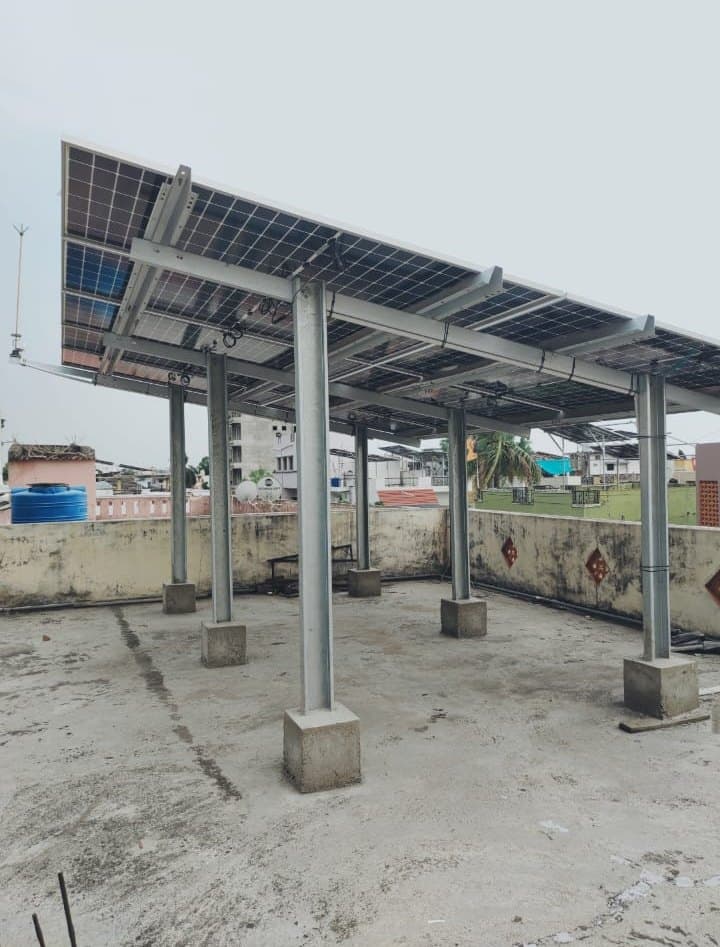
Elevated structure · Gwalior
Raised clear of the roof so the terrace stays usable, the panels stay cool and nothing pools underneath through the monsoon.
How it works
Your meter starts running both ways.
An on-grid system does not store power — it trades it. You use what you generate as you generate it, push the surplus onto the grid for credit, and draw back from that credit on the days you fall short.
- 01
Solar panels
Capture sunlight and generate DC electricity on your roof.
- 02
Solar inverter
Converts that DC into the AC power your house actually runs on.
- 03
Your home
Everything running right now is served by solar first.
- 04
Net meter
Measures what you produce against what you consume.
- 05
The grid
Surplus is exported for credit; shortfall is imported when you need it.
Worked example
Why one bad month doesn’t undo your savings
Credit carries forward. A heavy month in peak summer draws down the units you banked in the mild months rather than landing as a bill. Over a settlement year what matters is the net, not any single month.
| Period | Generated | Consumed | Net |
|---|---|---|---|
| Month 1 | 120 units | 100 units | 20 exported |
| Month 2 | 120 units | 100 units | 20 exported |
| Month 3 | 120 units | 150 units | 30 imported |
| Net position | 360 units | 350 units | 10 exported |
Illustrative figures for a small residential system.